Tenant vs landlord maintenance responsibility in Dubai
In most Dubai rentals the tenant pays for the small upkeep they use every day, and the landlord pays for the building, the equipment and any fault the tenant did not cause. The principle is simple. The argument starts when nobody has read the maintenance clause, or when a bill arrives after the work instead of a quote before it.
The usual split: minor upkeep versus major repair
The line most tenancy contracts try to draw is between use and failure. A tenant typically covers what they consume, clog or break: AC filters, light bulbs, fuses, a basin unblocked of hair, a shower head scaled up with Dubai water. A landlord typically covers the fabric of the building and the equipment they supplied: a compressor that has failed, a water heater that has split, a roof or wet area that leaks through the structure, damage caused by a building fault rather than by the people living there.
Some contracts add a cost threshold, where the tenant carries small repairs below a set amount and the landlord carries anything above it. The amount changes from contract to contract, so check what your tenancy contract actually says, and ask the landlord or agent to confirm in writing which side pays for the job in front of you. Treat this as a practical read of how Dubai tenancy maintenance obligations usually fall, not legal advice. If the clause is genuinely unclear, have it clarified before anyone spends money.
AC servicing, filters and gas: who books it and who pays
Split the air conditioning into two things, because they land on different sides. A service is upkeep: wash the filters, clear the drain line, check the coils and the thermostat. The tenant runs the system every day, so routine servicing usually sits with them. A fault is different. A refrigerant leak, a failed compressor, a burnt control board, a fan motor, a drain that has been dripping into the ceiling for a month all sit with the landlord, because the equipment is theirs and the tenant did not cause the failure.
Gas is the point people get wrong. Refrigerant does not get used up like fuel. If the system is short of gas, it has a leak, and a leak is a repair, not a top up.
Booking order decides who ends up paying. As a tenant, report the fault in writing before you call anyone and get approval for the repair. A bill handed over after the work is the most common reason a fair claim gets refused, and it is avoidable. Mekina Waterproofing's roofing and waterproofing jobs run in the opposite order: a written, itemised quote first, the customer approves it, then the technician is dispatched. The same pattern covers roof leak repair and waterproofing in Dubai on villas.
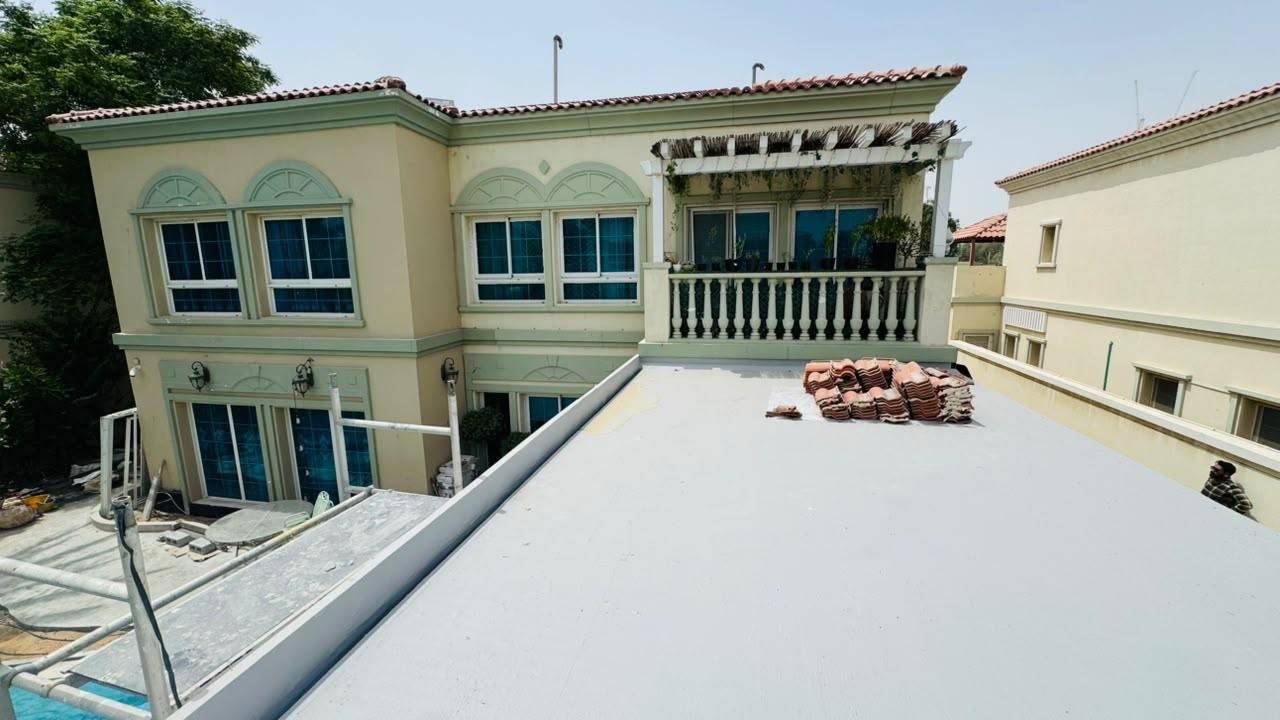 Roof and envelope work on a Dubai villa. Structure and waterproofing sit with the landlord, not the tenant.
Plumbing, leaks, painting and electrical
Water damage is decided by where the water started. A burst pipe or a failed joint inside the wall is the landlord's repair. A drain blocked by wipes, cooking oil or a toy is the tenant's. Water arriving from the flat above is a building matter, so report it to the landlord and to building management the same day with photos, even before the damage shows on your ceiling.
Waterproofing is a landlord item and the one people postpone. When a roof coating or a wet area fails, the repair is never just the membrane. Drying, cutting out stained gypsum board, replacing it and repainting the patch belong to the same job and should sit on the same quote, or the tenant ends up paying twice for one leak.
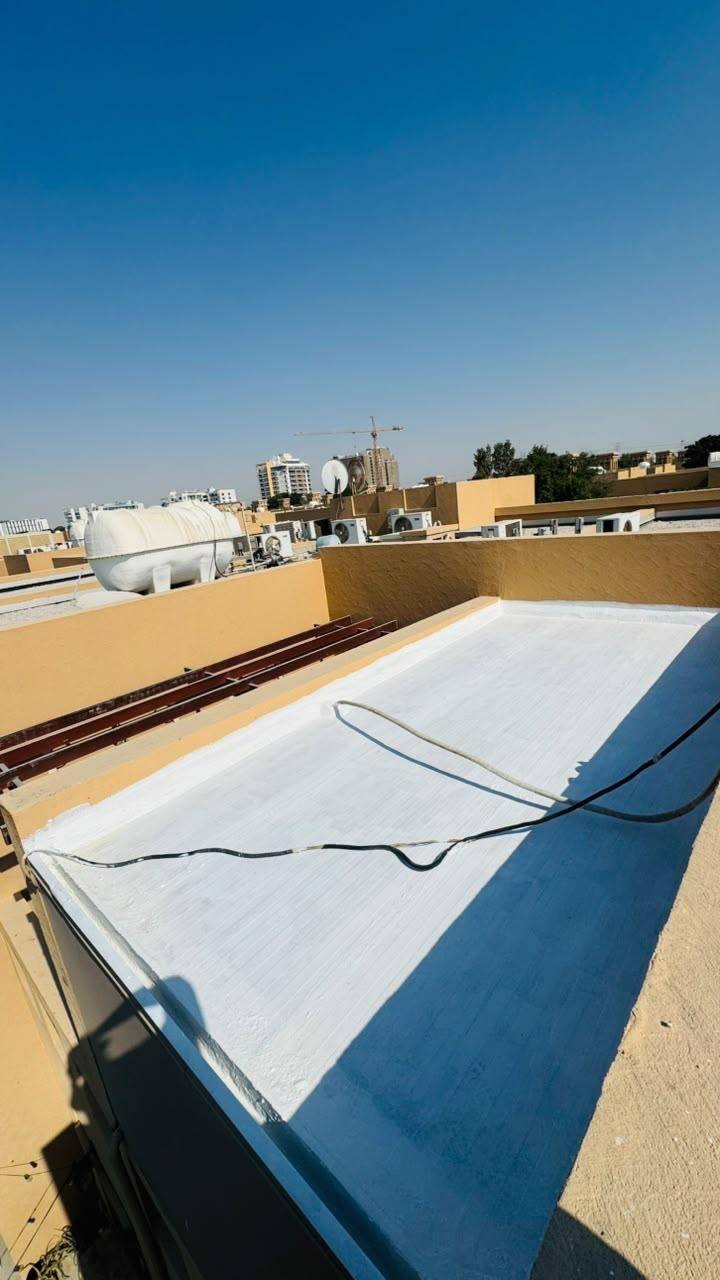 A roof coating like this is a landlord item. Left undone, the stain appears on a tenant's ceiling.
Painting at handover ends more tenancies badly than any other item. Fair wear and tear is not damage, and a family that has lived somewhere for years will leave scuffed paint behind. Who pays for painting in a rented apartment in Dubai depends on the clause, not on habit. Some contracts require a repaint on exit, most do not unless the walls are damaged beyond normal use. Read that line before you budget for it.
Electrical splits the same way. Sockets, switches, the distribution board and fixed light fittings came with the property and are the landlord's. Bulbs, batteries and anything damaged by the tenant's own appliance are the tenant's.
The tenancy clause and the paper trail
A maintenance clause worth having names four things: who arranges and pays for AC servicing, whether there is a cost threshold and what it is, what condition the property must be returned in, and how quickly the landlord must respond to a fault that affects habitation. If you are the landlord, add who may authorise work and up to what value, because a tenant left waiting in August will call someone and argue about the invoice later.
Then keep a paper trail that would survive a disagreement. A dated photo before the repair. A written message reporting the fault, not a phone call. The quote, then the approval, then the invoice. When the invoice matches the quote line for line, the conversation about who pays is short. More Dubai roofing and waterproofing guides cover the same ground for other jobs.
Their team is professional, reliable, responsive, and solution-oriented. 5 stars
The Google rating sits at 5 from 21 reviews, and it comes from jobs where the scope was agreed in writing before anyone picked up a tool.
Getting a quote both sides will accept
Send photos, not descriptions. For a leak, the wet patch, the ceiling below it and the pipe run if it is visible. Add the building name, the unit location and whether the property is occupied.
Paste in the maintenance clause wording from your tenancy contract, or say plainly whether you are the tenant or the landlord and who is expected to pay. That one line decides whether the quote goes to the owner or the occupant, and it ends the invoice argument before it starts. WhatsApp is the fastest way to send all of it on +971 58 589 5844. From those photos you can get one written, itemised quote with labour, parts and exclusions listed separately, which is exactly what you need when the question is who owes what.
Frequently asked questions
Who pays for AC repair in a Dubai rental, the tenant or the landlord?
It depends on whether the job is a service or a fault. Filters, cleaning and a blocked drain line usually sit with the tenant, while a gas leak, a failed compressor or a burnt control board usually sit with the landlord. Check the maintenance clause in your contract and confirm in writing with the landlord or agent before work starts.
Do I have to repaint the apartment before moving out in Dubai?
Only if your tenancy contract says so, or if the walls are damaged beyond fair wear and tear. Scuffs, faded paint and small nail holes from normal living are usually not enough to charge a tenant for a full repaint. Read the exit clause and photograph every wall before handover.
What counts as minor maintenance under a Dubai tenancy contract?
Usually consumables and small jobs the tenant uses daily: bulbs, fuses, AC filters, silicone, a single blocked basin. Some contracts also set a cost ceiling below which the tenant pays, and that figure differs between contracts. Your own contract is the only version that counts.
Can a tenant call their own technician instead of the landlord's?
Often yes, but get written approval first, especially if you expect the landlord to pay or reimburse. Send the fault report, then the itemised quote, then the approval, then the invoice. Without that sequence a landlord can refuse the bill even when the repair was fair.
What should an itemised maintenance quote include?
Labour and parts as separate lines, the callout charge if there is one, VAT, and what the price does not cover. For an AC job, note whether gas and a leak test are included. Those lines let a tenant or a landlord see exactly which part of the bill is theirs.